On the waterMálaga
Licence-free boat rental in Málaga port
Apr–Oct
Small motorboats that anyone can take out after a briefing are the easiest thing to rent on this coast and the easiest to misjudge. What the no-licence category really permits, what it is like leaving a working commercial port with cruise ships in it, how far you can realistically get, and the local wind that decides whether you go at all.
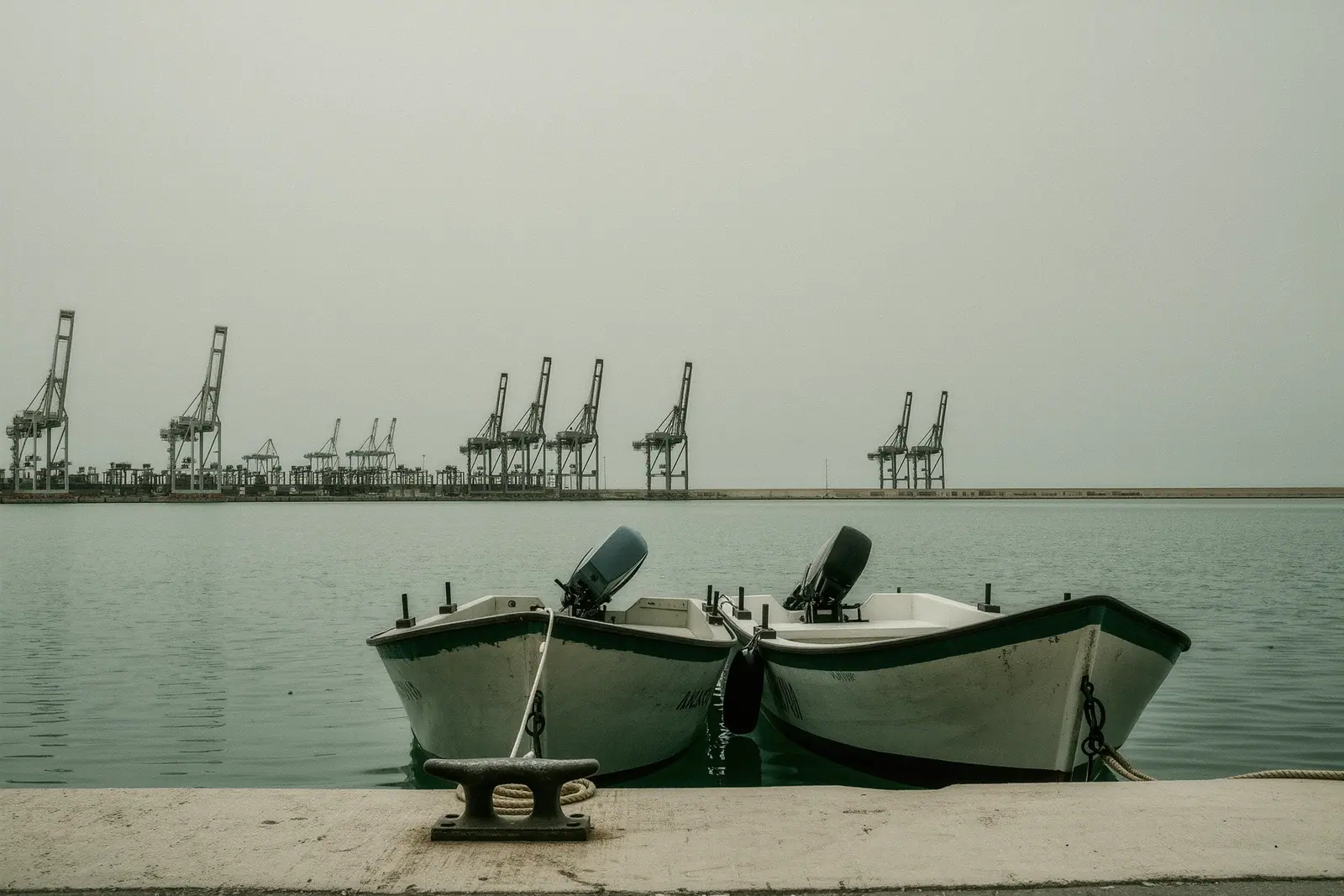
Málaga is one of the few Spanish cities where you can walk out of the old town, cross the palm-lined promenade of the port, and be handed the keys to a boat twenty minutes later. No certificate, no course, no sailing history. A briefing, a signature, a deposit and a pontoon.
That accessibility is genuine and it is also the reason a certain number of these boats come back later than planned, lower on fuel than expected, with everyone aboard quiet.
What the no-licence category is, roughly
Spain runs a tier below the recreational skipper certificates: small, low-powered craft that may be rented to someone with no qualification at all, on the basis of a briefing given by the operator. The tier is defined by limits — length, engine power, distance from the coast, daylight only — and those limits are set nationally, not by the rental base.
Two things follow. The first is that the boat you are shown has been chosen to sit inside the category, so its engine is modest and its hull is small. The second is that the limits have been revised before and can be revised again, so the only useful answer to “how big can I go” is the one the operator gives you in writing on the day, ideally checked against the maritime authority.
What that briefing should cover, and what to insist on if it does not:
- Starting, stopping and what to do if the engine will not restart.
- The kill cord, and the fact that it goes round your leg every time.
- The permitted area, drawn on a chart or a plotter, with the boundaries named.
- The lifejackets, where they are, and one fitted to each child before you leave.
- The VHF or the phone, the base number, and the emergency number.
- How to pick up a mooring or anchor without wrapping the rope round the propeller.
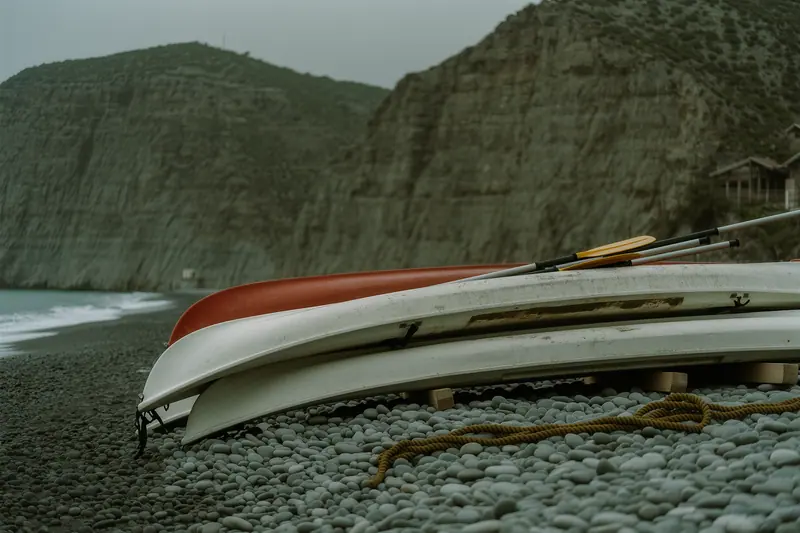
Leaving a commercial port
This is what makes Málaga different from Benalmádena or Fuengirola, and it is worth thinking about before you book.
Málaga is a cargo and cruise port with a leisure quarter attached. The approach is wide and deep, guarded by the long eastern breakwater with the old lighthouse on the point, and it is used by ships that cannot alter course for you. Cruise vessels come and go through the season, and there is a regular ferry link to North Africa. None of this is dangerous to a small boat that stays out of the channel and crosses behind rather than in front. All of it is unfamiliar if your only previous boating was on a lake.
The compensation is that the water immediately outside is flat, the coast is straightforward in both directions, and you are never far from somewhere to land.
Realistic range from the port
| Direction | Destination | Rough distance | What it is |
|---|---|---|---|
| East | Pedregalejo and El Palo | 2–3 nm | City beaches, traditional rowing boats, lunch ashore |
| East | El Cantal cliffs, Rincón de la Victoria | 5–6 nm | The first real cliffs, sea caves at the base |
| West | Torremolinos and the airport shoreline | 4–5 nm | Aircraft overhead, long open beaches |
| West | Benalmádena marina | 8–9 nm | A different harbour, and a fuel berth |
| East | Torre del Mar and beyond | 12 nm+ | Out of range for most licence-free hires |
The number that matters is not the distance but the return. Everything on this coast is easy going one way in the morning and slow coming back in the afternoon, because of what the wind does.
Terral, levante and the afternoon breeze
Three words that Málaga uses about weather, and all three change a day on a small boat.
The sea breeze. On most settled summer days the morning is glassy and a breeze fills in from the south-west somewhere around the middle of the day, building through the afternoon. Short, steep chop rather than swell. It is why every experienced person here goes out early and is back before five.
Levante. The easterly. It brings haze, a lumpy sea running along the coast and, on the eastern side of the province, conditions that will make a small open boat thoroughly unpleasant. If the forecast says levante, plan west.
Terral. The local hot wind off the land, which pushes Málaga’s temperature to absurd numbers in summer and flattens the water near the beach. It looks like the perfect day. It is offshore, which means it pushes anything light away from the land — a genuine hazard for paddleboards on the city beaches and a reason to keep an eye on the fuel in a small boat.
Money, and what is not in it
Expect a half day rather than a full one to be the standard product — often a morning slot and an afternoon slot, with the morning worth more for the reasons above. High-season rates for the small licence-free boats typically sit in the low to mid hundreds of euros for a half day, less in the shoulder months, and fuel is very often extra and charged on return.
The deposit is usually a few hundred euros on a card. Ask what it covers. Propeller damage, grounding and anything below the waterline are commonly outside whatever cover exists, which on a coast with sand bars off the river mouths is not academic.
Parking is the unglamorous part. The port and the seafront fill in summer, the underground car parks around the centre are the reliable option, and the walk from them to the pontoon is longer than it looks with a cool box.
The recommendation
Take the morning slot. Not the afternoon one, whatever the price difference.
The sea off Málaga between eight and one is a different place from the sea between two and seven, and on a boat this size that is the whole experience. Go east to the cliffs at El Cantal, anchor off the rocks for an hour, come back along the city beaches, and hand the boat over before the breeze has properly filled in. If you want more range than that, you want a bigger boat and someone who holds a certificate for it — the options are set out in what you can take out without one.
What to check before you book
- Ask which category the boat falls into and confirm in writing that no certificate is required for that exact vessel.
- Get the permitted distance from shore and whether you may go out of sight of the base, written on the contract.
- Confirm whether fuel is included, pre-paid or charged on return, and where the fuel berth is.
- Ask what happens if the engine stops: who comes, how long, and whether recovery is charged.
- Check the boat carries lifejackets in the sizes your party actually needs, including children, before you leave the pontoon.
- Look at the forecast for the afternoon rather than the morning. The wind here builds after midday almost every day in summer.
- Note the return time and the penalty for being late — the pontoon slot is usually resold the same afternoon.
Questions people actually ask
- Do I need a licence to rent a small motorboat in Málaga?
Not for the smallest category. Spain allows craft below set limits on length and engine power to be rented without a certificate, subject to a signed briefing, daylight use and a maximum distance from shore. The limits are set nationally, they have changed more than once, and the operator applies them to a specific boat. Confirm the current position with the company and the maritime authority rather than relying on a general rule.
- How far can I actually go on a licence-free boat from Málaga?
Less far than the fuel allows. The permitted distance from the coast is part of the rules, and the practical limit is the afternoon wind, which builds most days in summer. A realistic day is east to the cliffs beyond Rincón de la Victoria or west to Torremolinos and back, with a long stop somewhere in the middle. Anything more ambitious is a boat with a skipper.
- Is the harbour difficult to leave?
It is a working commercial port, which means the exit is shared with cruise ships, the ferry and occasional cargo movements, and you keep out of the main channel rather than crossing it casually. It is not technically difficult — the water is flat and the marks are obvious — but it demands more attention than a small leisure marina. The briefing covers it; listen to that part.
- What is the deposit on a small boat?
Usually a few hundred euros, held on a card, released after the return check. It is far smaller than a yacht charter deposit because the boat is worth far less, but the damage exclusions are similar in shape: the propeller, the hull below the waterline and grounding are commonly outside any cover. Ask what is excluded before you take the keys.