On the waterMálaga
What you can take out of an Andalusian marina without a certificate
Apr–Oct
The gap between a paddleboard and a chartered yacht is wider than most visitors realise, and there are three or four rungs on the ladder between them. What Andalusian marinas will hand over on a signature and a briefing, what needs a recognised certificate, how the operator decides, and the point where paying for a skipper becomes the cheaper option.
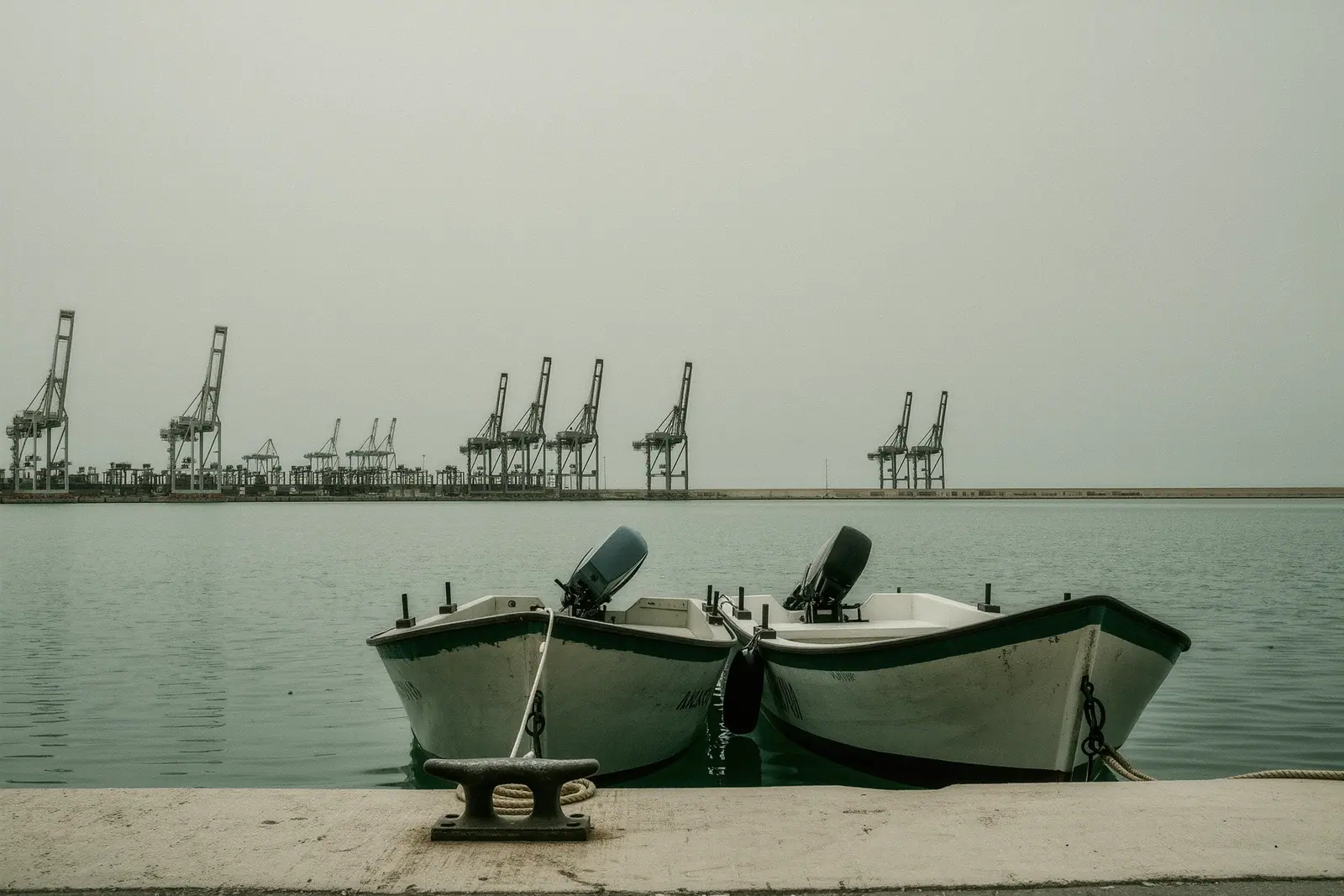
Somebody at the marina gate will always tell you it is easy. Somebody else will tell you it is impossible without a licence. Both are describing real boats; they are just describing different rungs of the same ladder.
Between a hired paddleboard and a chartered sailing yacht, an Andalusian marina has four or five distinct products, each with a different answer to the question of what you have to prove before they hand you the keys.
The ladder, from bottom to top
| What you rent | What you must show | Typical deposit | Where it stops |
|---|---|---|---|
| Board, kayak, pedalo | Nothing | Small or none | The buoy line |
| Small licence-free motorboat | Signature and a briefing | Low hundreds | A set distance from shore, daylight only |
| Larger motorboat or RIB | A recognised skipper certificate | Several hundred to low thousands | Wherever the contract allows |
| Bareboat sailing yacht | Certificate plus a sailing history | Low to mid thousands | Weather and the contract |
| Any of the above, skippered | Nothing | Often much lower | What the skipper judges safe |
The interesting rows are the second and the last. Those two between them cover almost everybody who arrives on this coast wanting to be on the water and does not sail at home.
The briefing tier, and what it really permits
Spain allows craft below set limits to be rented to someone with no qualification, on the basis of a briefing. The limits cover length, engine power, distance from the coast and daylight use, and they are national rather than local, which is why the same boat is available in Málaga, Benalmádena, Fuengirola and Caleta de Vélez on the same terms.
What varies is how seriously the briefing is taken. A good base spends twenty-five minutes, draws your permitted area on a chart, makes you start the engine yourself and watches you leave the berth. A poor one hands you a laminated card. You cannot control which you get, but you can insist on the full version, and it is entirely reasonable to ask for it.
The practical shape of a day at this tier is set out in licence-free boat rental in Málaga port: short range, morning slot, back before the breeze.
The certificate tier, and whose certificate counts
Above the briefing threshold you need a recognised qualification, and the word doing the work is recognised. There is a Spanish ladder of recreational certificates, and there is the International Certificate of Competence, which is widely accepted on this coast and is what most visiting northern European skippers carry.
Three things to know:
The operator decides, and their insurer decides for them. A certificate that is legally valid may still be refused for a particular boat if the company’s policy says otherwise. That is not obstruction; it is the underwriter.
Send the document in advance. A photograph of both sides, by email, with the boat named, and a written reply confirming acceptance. This is the single most useful five minutes in the whole booking process.
A sailing history may be asked for as well. For anything with a mast, expect to be asked what you have sailed, how big, where and when. A certificate obtained on a reservoir in a weekend, attached to a request for a large boat in August, is declined politely or comes with a mandatory skipper for the first day.
When the skipper is the cheaper answer
Run the numbers rather than the pride.
A skipper is a daily fee on top of the boat, and you generally cover their food. Against that: the deposit frequently falls sharply or disappears, because the person responsible for the boat works for the company; the excess-reduction product becomes unnecessary; and the permitted cruising area sometimes widens, because the restriction existed to protect an unknown renter.
On a three or four day booking, those offsets can cover most of the skipper’s fee. On a single day out, the skipper is simply the price of going somewhere good without spending the morning learning a boat.
There is also a middle option worth asking about and almost nobody does: a skipper for the first day only, on a longer booking. It converts the worst part of a bareboat week into the easiest, and it costs one day.
Where the marina itself changes the answer
The base matters as much as the certificate. Leaving Málaga means a commercial harbour with cruise traffic and a shipping channel. Leaving Benalmádena means a sheltered basin and a maze of pontoons. Leaving a small Axarquía harbour means shallow entrances and a fishing fleet with right of way in practice if not in law.
Some operators quietly grade their acceptance by base for exactly this reason, and a certificate that is fine for a day boat out of a leisure marina may come with more questions attached at a working port. The comparison between the three main bases on this coast is in chartering out of Málaga, Benalmádena or Marbella.
The unpowered exception
None of the above applies to anything without an engine. Kayaks, paddleboards, pedalos and small sailing dinghies sit outside the certificate system entirely, and what governs them is the local beach regulation — buoyed swimming zones, marked channels, flags — rather than the maritime one. That is covered on the city beaches in paddleboard hire in Málaga.
It is also, for a surprising number of people, the right answer. The best hours this coast offers are early, close in, and quiet, and the equipment that suits them costs twenty euros and needs nothing from you but a signature.
What to do before you book anything
Write one email. Name the boat, name the dates, attach the certificate if you have one, and ask three questions: is this boat available to me with what I hold, what is the deposit, and what does a skipper cost per day.
The reply tells you which rung you are on and what it costs to move up one. Every problem on this coast that ends with a family standing on a pontoon watching somebody else take their boat out started with that email not being sent.
What to check before you book
- Ask the operator to state in writing which certificate, if any, the specific boat requires — against the hull, not the category.
- If you hold a certificate from outside Spain, send a photograph of both sides of it and get written acceptance before you pay.
- Ask whether a skippered option exists for the same boat and what it costs per day. Compare totals, not day rates.
- Confirm the permitted area and whether it changes when a skipper is aboard.
- Check whether the deposit falls if you take a skipper. It usually does, sometimes to nothing.
- Ask what the operator does about a forecast they do not like — cancel, refund, or leave it to you.
Questions people actually ask
- Can I rent a boat in Andalusia with no licence at all?
Yes, within limits. Spain sets a national threshold on length, engine power, distance from shore and daylight use, below which a boat can be rented on a signed briefing alone. Above it you need a recognised certificate. The threshold has been revised more than once and the operator applies it to a specific vessel, so treat any figure you read as a prompt to check rather than as the rule.
- Is a foreign licence accepted in Spanish marinas?
Often, but it is the operator who decides and their insurer who stands behind the decision. An International Certificate of Competence is widely recognised on this coast. Certificates from further afield vary. Send a scan and get acceptance in writing before you pay a deposit, because turning up with an unrecognised card is not a refundable mistake.
- Do I need a radio licence as well?
For a boat carrying VHF, a separate radio operator qualification exists in the Spanish system and is sometimes asked for. On licence-free craft it does not arise, because those boats generally carry a handheld or nothing. On a chartered boat, ask what the operator requires alongside the skipper certificate rather than assuming one document covers both.
- Is it cheaper to hire a skipper or to get certified?
For one holiday, the skipper, every time. A course takes weeks and money, and it is worth doing only if you intend to keep sailing. For a week on this coast a skipper adds a daily fee and their food, and frequently removes a four-figure deposit at the same time, which narrows the gap considerably.