On the roadMálaga
One-way car rental between Málaga, Seville and Granada
All year
Dropping a car in another Andalusian city removes the worst day of most road trips, the one spent driving back the way you came. What the one-way fee actually depends on, which of the two inland routes to take, where the fee disappears entirely, and the journeys where the train wins and you should not rent at all.
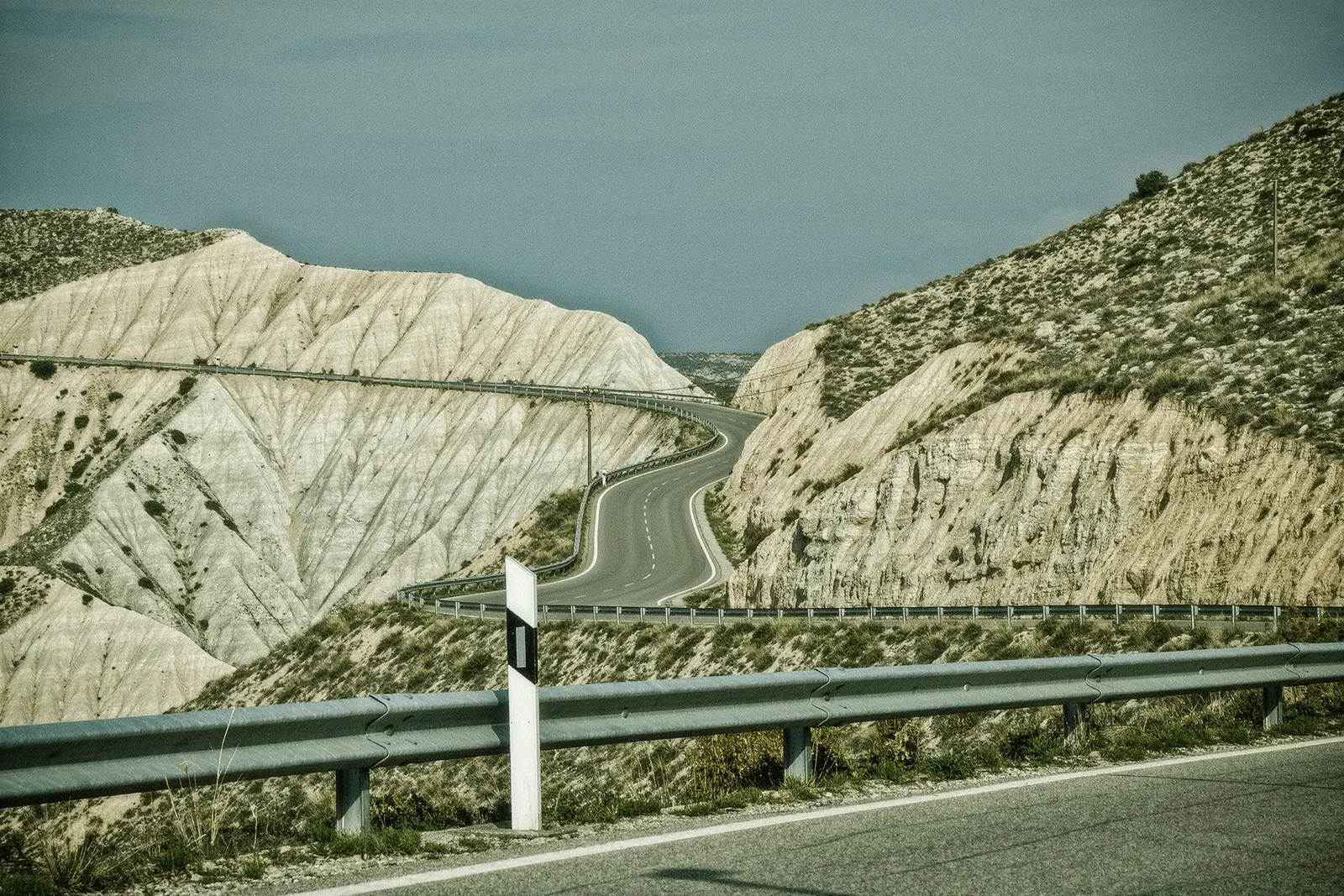
The best day of an Andalusian road trip is the one where you drive from Málaga over the mountains to Ronda, then on through the Serranía and down into the Guadalquivir plain. The worst day is the one where you drive back.
One-way rental deletes the second day. It is also one of the least transparently priced things in car hire, because the fee has almost nothing to do with the distance and almost everything to do with whether the company wants the car where you are leaving it.
What the fee is really about
A one-way charge is a fleet-repositioning cost. Ask what the company needs and the numbers start making sense.
- Airport to airport, same company, both large. Frequently the cheapest, and occasionally free, because both bases handle enough volume that a car in either place is useful.
- Airport to city-centre depot. More expensive. Town branches are small and do not want extra stock.
- Town depot to another province. The most expensive, and sometimes simply not offered.
- Against the seasonal flow. In spring, cars want to be on the coast. In autumn they want to leave. A drop that helps the company do what it was going to do anyway is cheaper.
The consequence is practical: price the journey three or four ways before you accept the first number. Málaga airport to Seville airport, Málaga airport to Seville city, Málaga city to Seville airport, and the same set for Granada. The spread between the cheapest and the dearest of those is routinely larger than the cost of a day’s rental.
| Route | Fast option | Time | The alternative | Time |
|---|---|---|---|---|
| Málaga to Granada | A-45 north, then A-92 east | About 1 h 30 | Coast to Motril, then up | About 2 h 15 |
| Málaga to Seville | A-45, A-92 west via Osuna | About 2 h 15 | A-357 and Ronda, then north | Most of a day |
| Málaga to Córdoba | A-45 the whole way | About 1 h 45 | Antequera and the lakes | 3 h with stops |
| Granada to Málaga | A-92, A-45 south | About 1 h 30 | Alpujarras and the coast | A full day |
The two routes to Seville, and they are not the same trip
The motorway route climbs out of Málaga on the A-45 over the Puerto de las Pedrizas, drops onto the plain at Antequera and turns west on the A-92 through Osuna. It is a good, fast, monotonous road. Two hours and a bit, no tolls, one services stop.
The other route goes inland on the A-357, up through Ardales, over to Ronda on the A-367, and then north-west on the A-374 and A-375 through Grazalema country and the white villages towards Utrera. It takes six or seven hours with the stops you will inevitably make, and it is the reason to have a car at all.
If you take the second one, note two things. The mountain sections are narrow, patched, and edged with the sort of stone that removes an alloy wheel — the tyre and underside exclusions on your contract are written for exactly these roads. And build in more time than the map says; the section between Ronda and the Sierra de Grazalema is slow in a way that satnavs consistently underestimate.
The Granada problem, and why it changes the answer
Granada is the one city pair where the car may be the wrong tool.
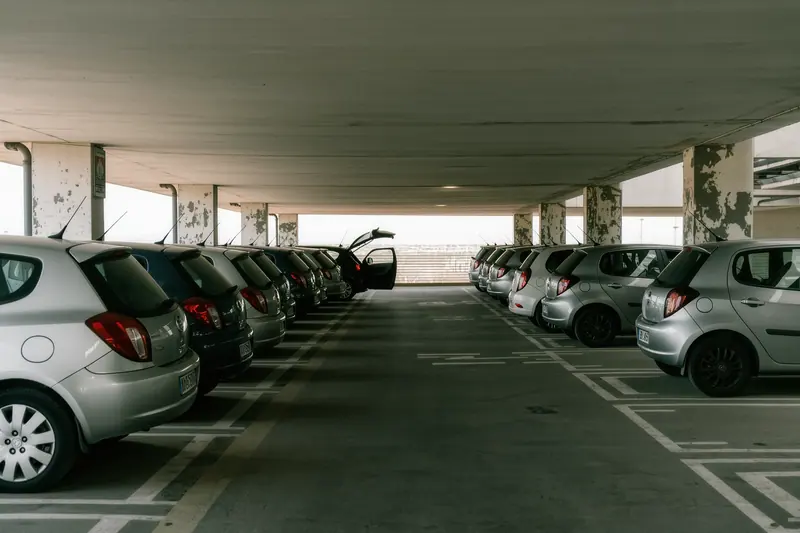
The drive is easy — motorway the whole way, ninety minutes, no tolls. The difficulty is at the other end. Granada’s centre is heavily restricted, the Albaicín is a lattice of streets no hire car should attempt, and the approach to the Alhambra funnels every visitor into the same handful of paid car parks. Arriving by car and then not using it for two days is a common and expensive outcome.
Two better shapes for the trip. Either drop the car at Granada airport, which sits out on the plain west of the city with easy road access, and take a bus or taxi in. Or do not drive at all: take the train or the coach, and pick up a car in Granada only on the day you leave for the Alpujarras.
Seville is more forgiving on arrival but has its own restricted core, so the same logic applies in a milder form.
Timing, seasons and the fee that vanishes
One-way availability follows the fleet, and on this coast the fleet has a strong seasonal direction.
- February to April. Cars are being moved towards the coast for the season. Drops away from Málaga are at their most expensive.
- May and June. Everything is where it needs to be. Fees are ordinary and availability is good.
- July and August. Fees rise with everything else, and short-notice one-way bookings are frequently refused because no depot has spare stock.
- October and November. The fleet is unwinding. This is when a drop in Seville or Granada is most likely to be cheap or waived, and the inland weather is the best of the year.
Book it four to eight weeks ahead. One-way is one of the few rental products that genuinely cannot be arranged well on the day, because it depends on the receiving depot agreeing to take the car.
Two things to do at the far end
Fuel and photographs.
Find a petrol station near the drop-off depot on a map before you leave Málaga. Arriving in an unfamiliar city, late, looking for somewhere to fill a tank within a few kilometres of a depot you have never seen, is how full-to-full contracts turn into refuelling charges. The same rules apply as at the pickup — see picking up the car at Málaga airport for what the fuel line on the contract commits you to.
Then photograph the car where you leave it, with the odometer and the gauge, and keep the drop-off receipt. A one-way return is checked by staff who did not hand the car over and have no memory of what it looked like when it left the coast.
What to check before you book
- Get the one-way fee quoted as a figure before you book, not as a policy. It varies by company, city pair and season.
- Compare airport-to-airport against city-to-city. The same journey can carry very different fees depending on the two depots.
- Check the drop-off depot opening arrangements and whether an out-of-hours return is permitted at all.
- Confirm the fuel policy applies at the return city, and find a petrol station near that depot on the map in advance.
- Ask whether the car may leave Andalusia if your route wanders towards Extremadura or Murcia.
- Photograph the car at drop-off, including the fuel gauge and the odometer, before you hand over the keys.
Questions people actually ask
- How much is a one-way fee from Málaga to Seville or Granada?
It varies enormously and is not proportional to distance. Between two large airports served by the same company it is sometimes small or waived outright; between a small town depot and a distant city it can exceed the rental itself. Always get the figure quoted for your exact pair of locations rather than assuming a standard charge exists.
- Is it quicker to drive to Granada or take the train?
By car it is a straightforward run of a couple of hours on motorway. There is also a rail connection between the two cities, and for a straight city-centre to city-centre trip with no stops it is competitive and considerably less stressful at the Granada end, where parking is genuinely difficult. Drive if you want to stop at Antequera or the lakes; take the train if Granada is the whole point.
- Which route should I take from Málaga to Seville?
The fast way is inland: up over the pass towards Antequera and then west on the A-92, around two hours of motorway. The slow way is through Ronda and the Serranía, which takes most of a day and is the better journey by a wide margin. Decide which of the two trips you are actually making before you book the drop-off time.
- Can I drop the car at a different airport in the same country?
Usually yes within Spain, and this is where fees are lowest, because the company can rebalance its fleet between two large airport bases. Crossing a border is a different matter entirely and is prohibited outright by many contracts. Ask explicitly if any part of your route leaves Spain.