On the roadMálaga
What an Andalusian mountain road does to a rental contract
All year
The cover you bought at the desk almost certainly stops at the tyres, the wheels, the glass and the underside of the car. Those are the four things Andalusian mountain roads damage. Where it actually happens between Ronda and the Axarquía, how the exclusions are worded, and what to buy instead of the counter product.
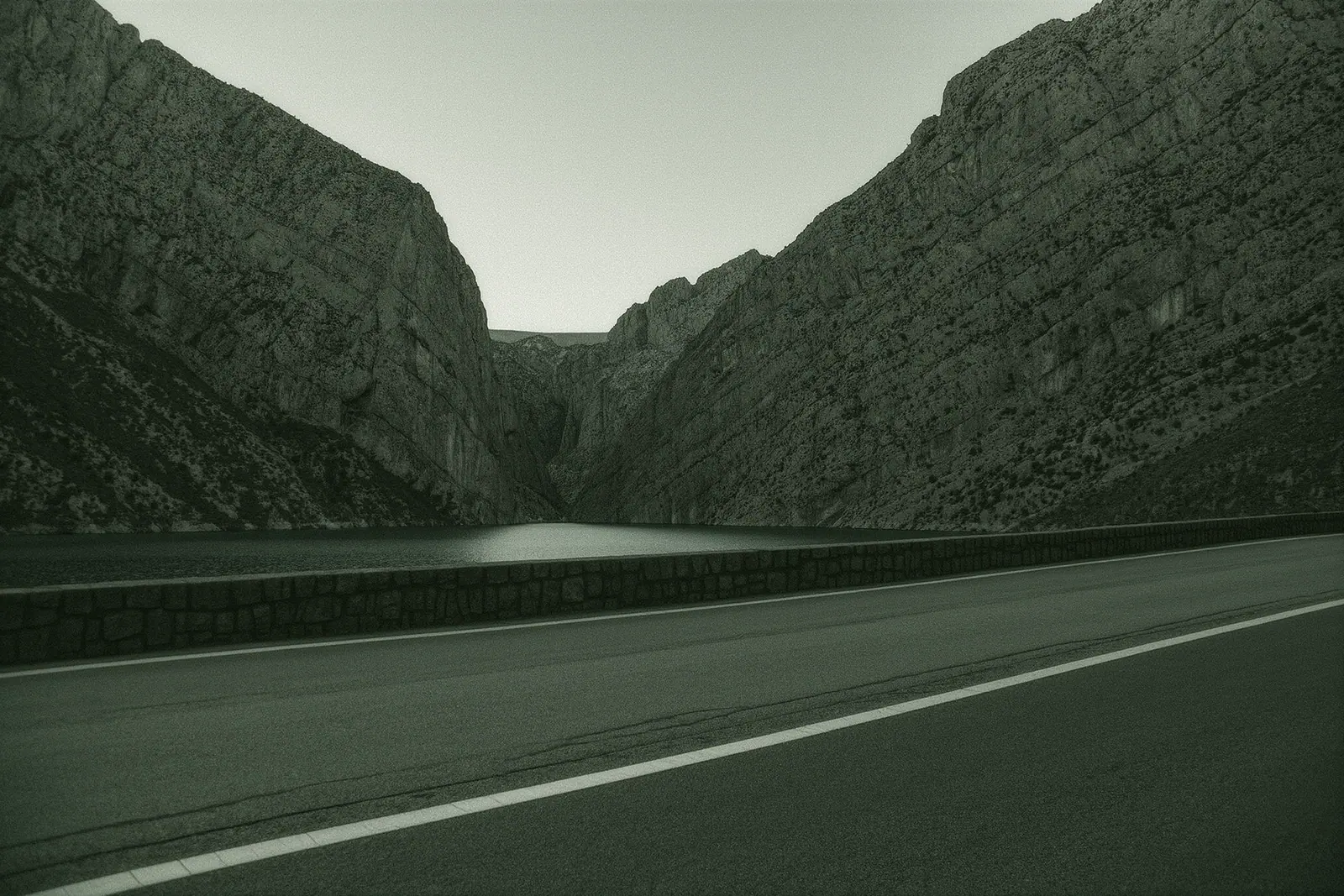
The road to Ronda is asphalt the whole way. So is the road over the pass to Antequera, and the one east along the coast to Nerja. This is not a province of dirt tracks, and the fear of Andalusian roads being rough is mostly misplaced.
The damage happens somewhere else. It happens on the last kilometre — the unmade access to a rural house above Alozaina, the gravel car park at a reservoir near Ardales, the kerb of a village street in Frigiliana where the wall is closer than you thought. And every one of those four kinds of damage sits outside the cover included in your rate.
The four exclusions, and where each one gets you
| Excluded item | Where it happens here | Typical cost to you |
|---|---|---|
| Tyres and wheels | Village kerbs, gravel pull-ins, cattle grids | A wheel refinish to a new tyre and rim |
| Glass and mirrors | Loose stone thrown up on the A-357 and mountain roads | A windscreen |
| Underside | Ramps, unmade access tracks, drainage channels | Anything from nothing to a sump |
| Roof | Olive and pine branches on narrow county roads | A respray panel |
Two of these are avoidable with attention. The kerbs of Andalusian villages are tall, square and made of granite, and the streets in Mijas, Frigiliana, Casares and the old quarter of Ronda are exactly wide enough that you will put a wheel against one. Slow down and take the extra half metre.
The other two are largely luck. A stone off a lorry on the A-357 towards Ardales is not something you can drive around, and neither is a drainage channel across the top of a track.
How the wording works
Rental contracts on the coast follow a common pattern. The rate includes a collision damage waiver with an excess. The waiver limits your liability for damage to the body of the car. Then a separate clause lists what the waiver does not touch, and that list is where the tyres, the glass, the roof and the underside live.
On top of that sits a usage clause. It typically says the car may be used only on public, surfaced roads, and that damage occurring off them is entirely yours regardless of what cover you bought. The word to look for is asphalted or paved. If it appears, that clause has teeth.
This matters more than people expect in inland Málaga province, where a great deal of rural accommodation is reached by a kilometre of graded dirt. It is perfectly drivable in a small hatchback in dry weather. It is also, on a strict reading, off-contract. Ask the company directly, describe the track, and take whatever they say in an email.
The roads that actually cause the claims
Four places in this province generate most of the disputes.
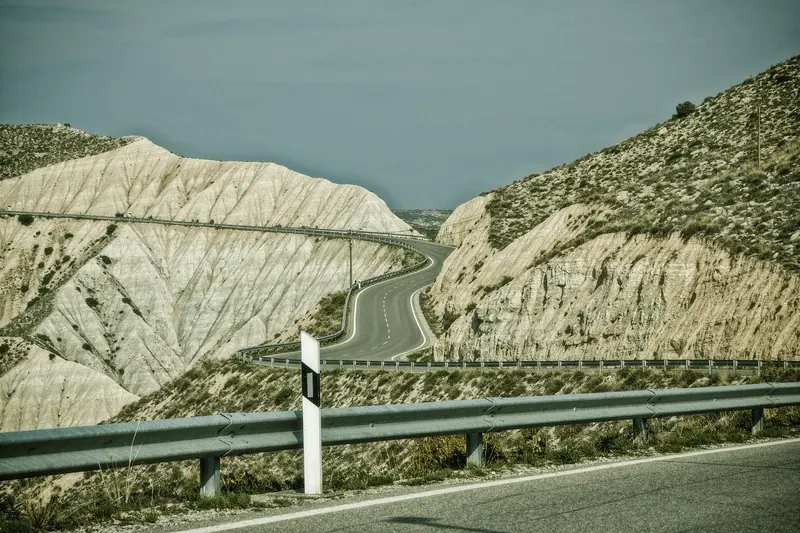
- The A-397 to Ronda and the roads over the passes. Not the surface, the grit. After rain, gravel washes onto the apexes and gets thrown by the car in front. Windscreen chips here are ordinary. The same road is the reason motorbike rentals carry the same exclusions in a harsher form.
- The MA-5403 and the approaches to El Chorro. Narrow, walled, and edged with broken tarmac that drops away. Kerbing a wheel while giving way is the standard incident.
- Village streets in the Axarquía. Cómpeta, Frigiliana, Canillas de Aceituno. Steep, cobbled in parts, and with corners that a modern car does not fit round in one movement.
- Beach and reservoir car parks. Unmade, potholed, and full of concealed concrete blocks. This is where undersides get their damage, and it is almost always while parking rather than while driving.
What to buy, and in what order
First, check the spare. A surprising share of current rental cars carry a sealant canister rather than a wheel. Sealant does not fix the damage these roads cause, which is a cut sidewall or a bent rim. If the car has no spare, that is not a reason to refuse it, but it is a reason to know what the assistance number covers before you go inland.
Second, decide about excess cover before you fly. Standalone annual or per-trip policies are a fraction of the counter price and frequently include tyres and glass explicitly, which is exactly the gap you are trying to close. The catch is that you pay the rental company and reclaim it afterwards. If you cannot carry that for a few weeks, the counter product is the honest choice — just buy it knowing what it costs.
Third, take the photographs. All four wheels individually, close enough to show the rim edge. The windscreen from inside, against the light. The sills and the front spoiler from a crouch. The roof, which almost nobody photographs and which is the panel that comes back with scratches from a narrow lane. Timestamp everything and do it in the daylight rather than under the strip lights of a parking deck.
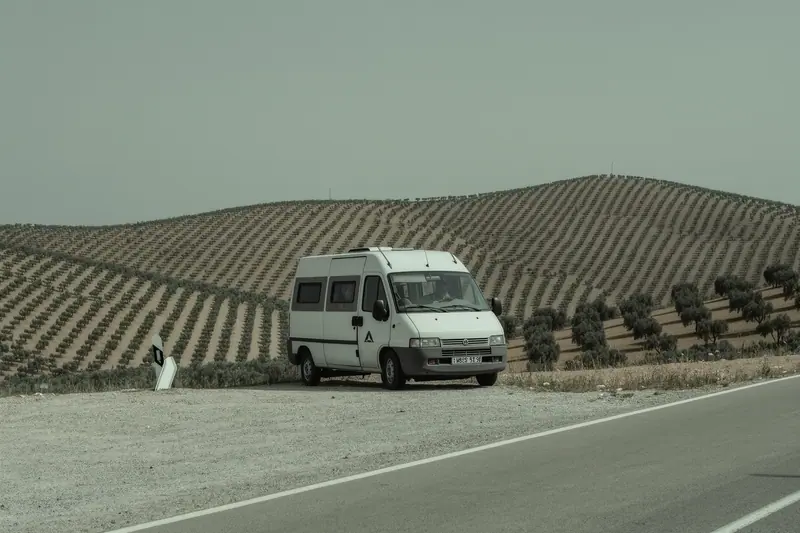
Larger vehicles make all of this worse rather than differently — the overhangs are longer and the ground clearance is not better. If you are taking a campervan round the province, the same exclusions apply to a body panel that costs several times as much to repair.
The thing worth doing that nobody does
Check the tyre pressures at the first petrol station, and look at the tread while you are down there.
Hire cars on this coast do enormous mileage between services, and a tyre that has been kerbed by the last renter will show it on the sidewall. Finding that in the forecourt on day one, photographing it and telephoning the company takes fifteen minutes. Finding it on the descent from Ronda takes considerably longer, and the bill for the tyre is yours either way unless you flagged it first.
What to check before you book
- Read the exclusions list, not the cover list. Tyres, glass, roof, underside and wheels are the ones to find.
- Ask whether the contract restricts you to surfaced roads, and get the definition of surfaced in writing.
- Photograph all four alloys, the windscreen and the sills before you leave the bay, in daylight if you possibly can.
- Check the spare. Many cars now carry a sealant kit that will not fix a sidewall cut, which is the damage these roads cause.
- Check the tyre pressures yourself at the first petrol station rather than trusting the handover sheet.
- Save the roadside assistance number in your phone and find out whether it covers unsurfaced access tracks.
- If you buy standalone excess cover, confirm it reimburses tyre and glass damage — many policies do, and that is the point of buying it.
Questions people actually ask
- Are tyres covered by rental car insurance in Spain?
Usually not by the basic waiver included in the rate. Tyres, wheels, glass, mirrors, the roof and the underside are the standard carve-outs across the industry, and they are what a mountain road damages. Counter excess-reduction products sometimes add them back; standalone third-party excess policies often do too. Read the specific wording rather than assuming either way.
- What counts as an unsurfaced road?
Broadly, anything not asphalted, including the compacted dirt tracks that serve reservoirs, trailheads, rural accommodation and many of the smaller coves. Some contracts define it precisely and some do not, which is worse. If the access track to where you are staying is not tarmac, raise it with the company before you book rather than after.
- What happens if I damage an alloy wheel?
You are charged for repair or replacement, typically without any waiver applying, and the amount comes out of the deposit. Kerbed alloys are the single most common charge on Costa del Sol rentals because the villages are narrow and the kerbs are high. Photographing all four wheels before you leave the bay is the only defence that works.
- Should I buy the excess cover at the desk or before I travel?
Standalone cover bought in advance is far cheaper per day and often broader. The trade is cash flow: the rental company still charges you and still holds the deposit, and you claim the money back afterwards. Buy at the desk only if you cannot absorb that gap, and in either case check the exclusions before you decide which is genuinely better value.