On the roadMálaga
Driving a hire car into central Málaga and the restricted zone
All year
The old town of Málaga is not closed to cars, which is exactly the problem — it is controlled by cameras, and a hire car that crosses the line generates a fine that arrives at your home address with an administration charge attached. Where the boundaries sit, what the emissions label is for, and the four car parks that solve it.
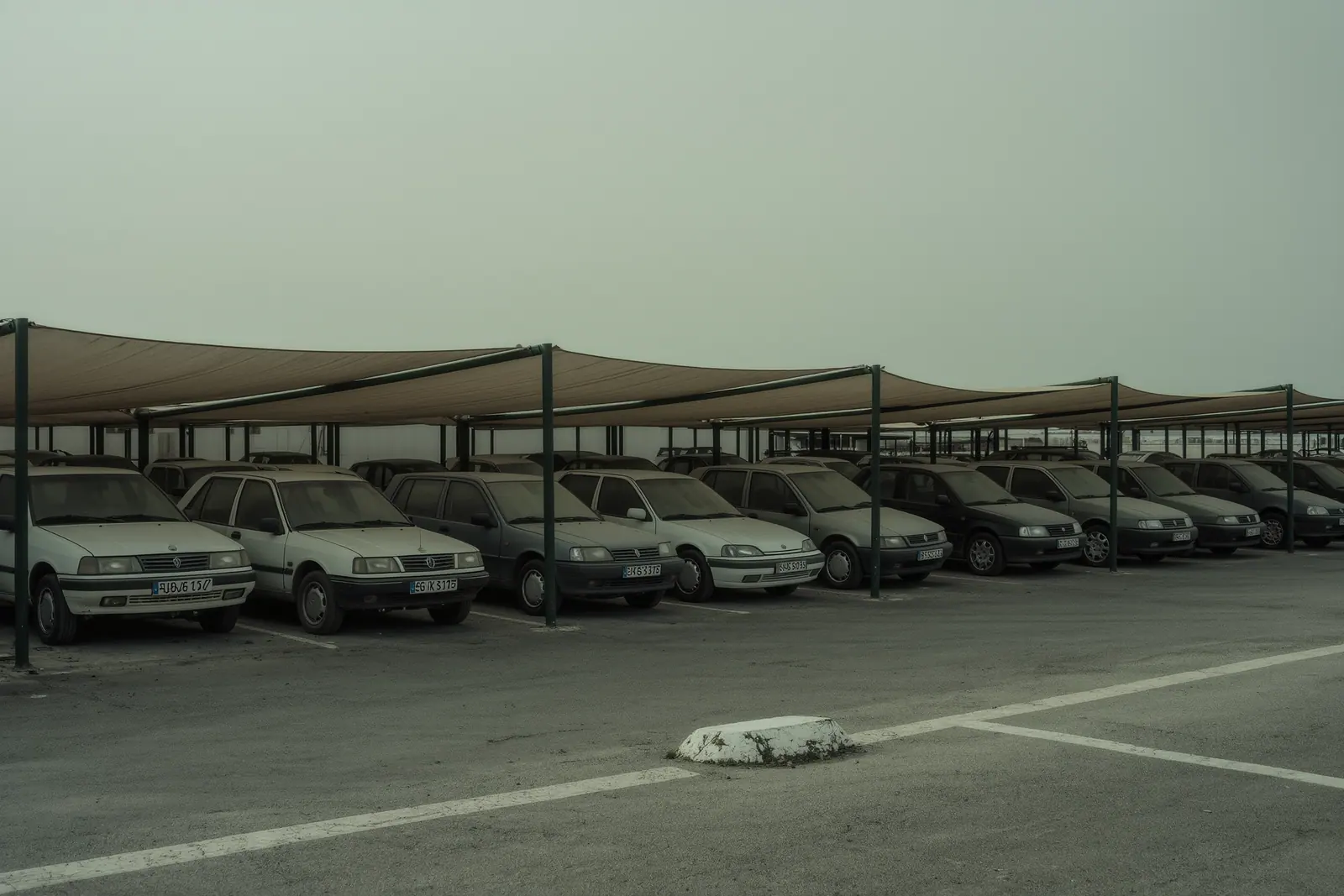
The mistake is always the same. You put the address of the apartment into the satnav, the satnav routes you through the old town because it is the shortest line, and four months later an envelope arrives with a photograph of your hire car crossing a boundary you never saw, plus a note from the rental company charging you for the privilege of having been identified.
Central Málaga is not pedestrianised in the simple sense. It is controlled, which is harder to notice and much easier to get wrong.
What is actually restricted, and by what
There are two separate things stacked on top of each other, and confusing them is half the problem.
The first is access control in the historic core. The tangle of streets between the Alameda, the cathedral, Calle Larios and the Roman theatre is substantially closed to through traffic, with retractable bollards, signed entrances and camera enforcement. Residents, deliveries within set hours, and guests of accommodation inside the zone can be authorised; everyone else is photographed.
The second is a low-emission zone of the type Spanish cities of this size have been introducing, keyed to the national windscreen label that classifies vehicles by emissions. That scheme is broader than the historic core and works on what you drive rather than who you are.
Both are set by the city, both have been phased in and adjusted, and both will change again. Treat anything you read — including this — as a prompt to check the current rules with the city and with your rental company, not as the rule itself.
The label on the windscreen
Ask for it at the counter and photograph it. A hire car from a mainstream airport fleet is usually new enough to carry a good classification, and if you are in something small and petrol you are unlikely to have a problem.
The exceptions are worth knowing. Older diesels, and in particular hire vans, sit at the wrong end of the scale, which is one more reason a van hired for a move in the centre needs checking before it is driven anywhere near the old town. Long-term winter contracts sometimes come from an older part of the fleet as well — worth asking if you have taken a car on a monthly winter rate and plan to use the city regularly.
Where to leave the car instead
The honest answer to driving in central Málaga is not to. The historic centre is about a twenty-minute walk end to end, and the ring of underground car parks around it is the local solution, not a tourist compromise.
| Approach from | Park around | Walk to the cathedral | Suits |
|---|---|---|---|
| Airport, A-7, MA-20 west | The Alameda and the river end | 5–10 min | First arrival with luggage |
| The port and Muelle Uno | Port-side parking | 10 min | A day that starts on the water |
| East, Pedregalejo, El Palo | The Merced and Alcazabilla side | 5 min | Alcazaba and the theatre |
| North, A-45, Antequera | The Camino de la Caleta and the northern edge | 15 min | Longer stays, cheaper rates |
Underground rates in the centre are charged by the hour with a daily maximum, and the maximum is what matters if you are leaving the car all day. Prices climb in high season and around the August Feria. Street parking inside the blue-marked zones is metered and time-limited, and finding a legal space within reasonable distance of the cathedral in the middle of a summer day is not a plan.
If you are staying in the city for two or three nights, the sharper move is not to have the car at all for those days — collect it from a town depot on the morning you leave, as set out in picking up at the airport.
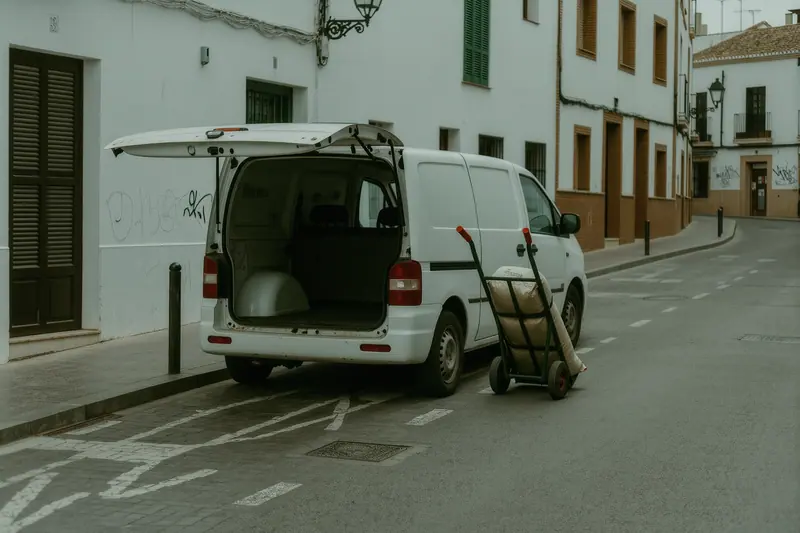
Two weeks the map does not tell you about
Semana Santa closes large parts of the centre for most of a week, and the closures move with the processions rather than following a fixed plan. Streets that were open at noon are barriers by five. If you are staying inside the centre in Holy Week, get the car out of the zone the day before and leave it out.
Feria week in the middle of August does something similar in a different way: the daytime fair takes over the old town, the evening fair moves to the fairground on the western edge, and everything in between is either closed, one-way or full. Both weeks are also the two hardest weeks of the year to find a space in the underground car parks.
When the fine arrives
Assume a lag of months. The penalty notice goes to the registered keeper, which is the rental company. The company identifies you as the driver, charges you an administration fee for the identification, and passes your details on. The fine itself then reaches you separately.
Two consequences. First, ask what that administration fee is when you pick up the car, because it is set by the company and can be a meaningful sum in its own right. Second, do not assume that a trip through the centre with no envelope in the first month means you got away with it.
Spanish penalties frequently carry a substantial discount for prompt payment, and the clock on that discount starts when the notice is issued rather than when it reaches you. That is the practical reason to give the rental company a current address and to open the envelope when it turns up rather than filing it.
The one habit that prevents all of this
Set the destination in the satnav to the car park, by name and address, before you start the engine — not to the hotel, not to the restaurant, not to the street you can see on the map. Every camera in the centre of Málaga is downstream of someone doing exactly what their phone told them, and the phone does not know which entrances have bollards in them today.
What to check before you book
- Ask the rental desk which environmental label the car carries and photograph the windscreen sticker.
- Check the current restricted-zone and low-emission rules with the city before you plan to drive into the old town — they are revised periodically.
- If your accommodation is inside the controlled area, ask the host to register your plate in advance and get written confirmation.
- Pick your car park before you set off and drive to that address, not to the address of your accommodation.
- Ask the rental company what it charges to process a traffic fine, on top of the fine itself.
- Keep the parking ticket and note the level and bay number. Central car parks in Málaga run to several floors and look identical.
Questions people actually ask
- Can I drive a hire car into the centre of Málaga?
You can drive to the edge of the historic centre and into the car parks that sit around it. The core is controlled and monitored, with access restricted to residents, permit holders and registered guests of accommodation inside it. The rules and the exact boundary are set by the city and change, so check the current position rather than following a satnav into a street it does not know is restricted.
- What is the environmental label on the windscreen?
Spain classifies vehicles by emissions and issues a windscreen sticker accordingly, which cities use to decide who may enter low-emission areas. Hire cars are usually recent enough to carry a favourable label, but not always, and vans are the common exception. Ask which label your car has and photograph it.
- How do traffic fines reach me after I get home?
The authority identifies the registered keeper, which is the rental company. The company names you as the driver and charges you an administration fee for doing so, then the fine itself follows to your home address. This can take months. The fee is separate from the penalty and is set by the company, so ask what it is before you go anywhere near a camera.
- Where should I park to visit the old town?
One of the underground car parks that ring the centre — around the Alameda, the port side, the Merced end or beneath the main avenue. All of them put you within a ten to fifteen minute walk of anywhere in the historic quarter, which is smaller on foot than it looks on a map. Drive to the car park address, not to your hotel address.