Two wheelsMálaga
Road bike rental and the climb to the Montes de Málaga
Oct–May
The old Colmenar road starts almost in the city and climbs for twenty kilometres into pine forest. It is the ride every visiting cyclist in Málaga does first. What to ask a rental shop for, how to get out of the city without a fight, and why the good bikes go in February rather than August.
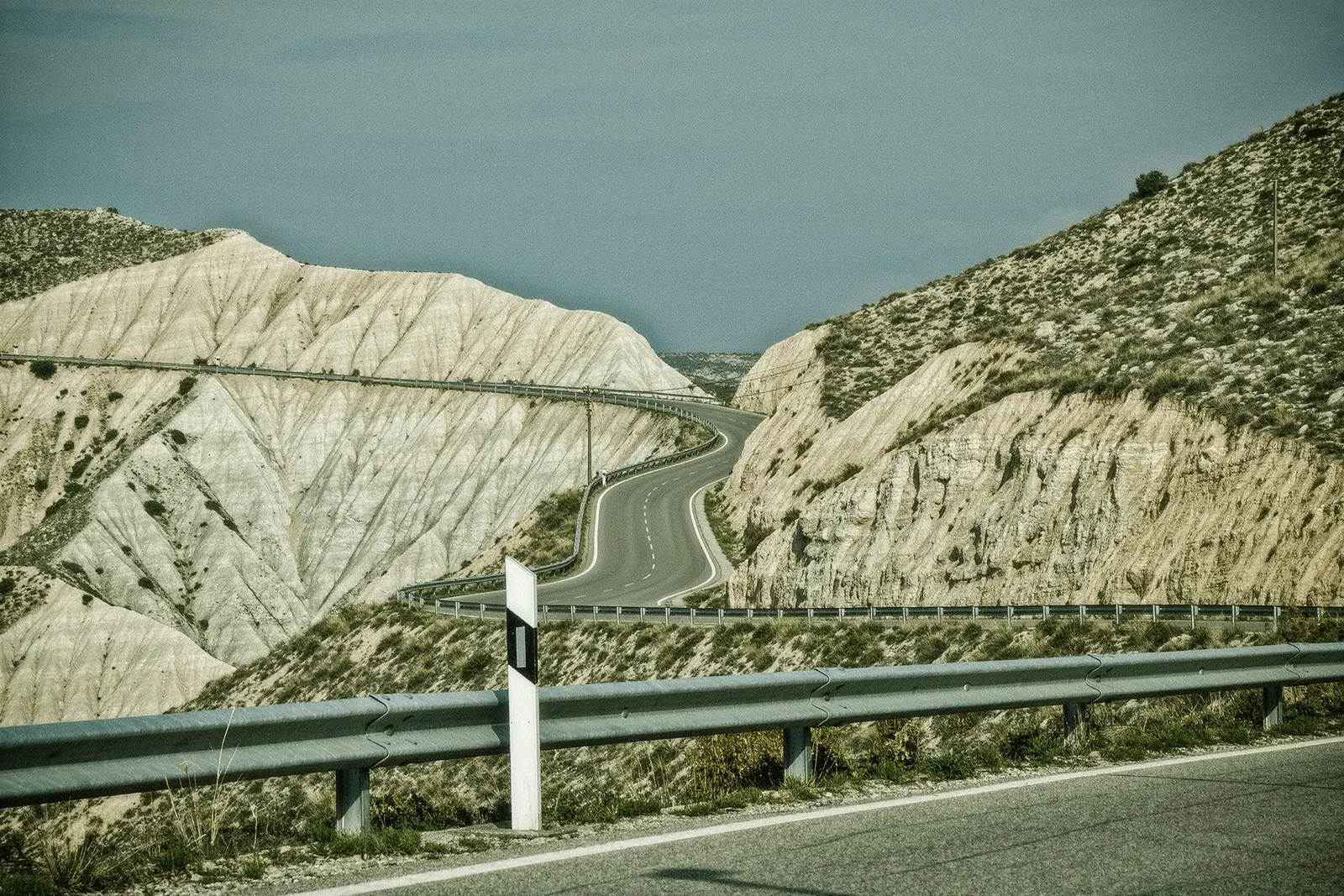
The road out of Málaga to the Montes starts in traffic lights and ends in pine forest, and the transition takes about six kilometres. That is the appeal. Very few cities of this size put a twenty-kilometre climb inside a natural park within riding distance of the seafront.
The A-7000, the old road to Colmenar, is what every visiting rider does on the first morning. It is also the ride that decides whether the bike you hired was the right one, because the descent is as long as the climb and you spend all of it on the brakes.
What the climb actually asks of the bike
Twenty kilometres, four to five per cent average, no hairpin stacks and very little shade until the pines thicken above the Fuente de la Reina. It is a rhythm climb. Nothing on it demands a very low gear in the way a short wall does, but ninety minutes of steady effort at the wrong cadence will hurt in a way that a steep kilometre never does.
| Setup | Smallest gear | On a steady 5% | Who it suits |
|---|---|---|---|
| 52/36 with 11–28 | 36 x 28 | Fine, if you ride a lot at home | Riders with race legs |
| 50/34 with 11–30 | 34 x 30 | Comfortable seated spin | Most visitors |
| 50/34 with 11–34 | 34 x 34 | Easy on the Montes, essential in the Axarquía | Anyone extending the ride north |
| 48/31 sub-compact | 31 x 34 | Very easy, spins out downhill | Long days, hot months |
The second thing is braking. The descent back into the city is twenty kilometres of near-continuous speed control with sightlines that close up under the trees. Look at the pads. Look at the tyres. Rental road bikes on this coast accumulate kilometres through the winter and the wear shows first on those two components.
Getting out of the city
The exit is the worst part of the day and the part nobody mentions. You have to cross from the seafront to the northern edge of the city, and doing that by instinct puts you on a dual carriageway with a slip road every four hundred metres.
- Start from the port end of the Paseo del Parque and follow the marked lanes inland rather than heading straight north on the main avenues.
- Use the Guadalmedina corridor. The path alongside the river channel takes you a long way north of the centre with no junctions worth the name.
- Pick up the A-7000 above the ring road, not below it. The kilometre or two either side of the ring road is the pinch point, and it is far easier at half past seven than at nine.
- Above the first switchbacks, traffic drops away and stays away until you are back down.
Riders staying east of the centre have it easier: the seafront gets you to the foot of the city with no junctions at all, and the promenade route is covered in the piece on riding the coastal path.
The season runs backwards from the tourist season
Málaga fills with visitors in July and August, and that is when the road bikes sit in the racks. The cycling season here is October to May, with the peak in February and March when the weather is reliably mild and the roads are quiet. Training groups from colder countries book blocks of bikes months ahead.
The practical consequence: a 56 cm frame with the gearing you want, in March, needs several weeks of notice. The same bike in August is available on the day and often cheaper. If your holiday is in summer, ride the Montes at first light and be off the mountain by eleven, or do not ride it at all — the terral, the hot dry wind that comes down off the interior, can put the city over forty degrees and the climb is exposed for its lower half.
Rates, deposits and what is not included
Expect roughly €25–45 a day in high season for a mid-range carbon bike with electronic or mechanical groupsets of current vintage, less for aluminium, and a steep discount from three days. A week is frequently the price of three or four single days, which means that if you are riding more than twice it is cheaper to keep the bike for the whole stay.
Deposits are normally a card authorisation, a few hundred euros for aluminium and substantially more for a current carbon frame. Pedals in your system are usually free; a computer, a second spare tube, a saddle bag or delivery to your accommodation frequently are not. Ask what the bike comes with rather than assuming, and bring your own shoes and helmet if you can.
Where to go once you are up there
Puerto del León is the obvious turning point, and most people descend the way they came. Two better options exist. Carry on north and drop to Colmenar for a longer loop that returns through Casabermeja and the Puerto de las Pedrizas country, which turns a two-hour ride into a full day. Or turn off onto the forest tracks in the park, which is a different bike entirely and is covered in the piece on mountain biking in the Montes.
The one thing riders regret is not carrying enough water. There are fountains and there are ventas along the road, but they are spaced for cars, not for a rider on a hot afternoon with one bidon. Two cages, both full, every time from March onwards.
What to check before you book
- Send saddle height, setback and bar reach in millimetres when you book. A bike set up from a guess ruins the descent, not the climb.
- Ask for the chainring and cassette on the actual bike, not the model in the listing. A 34 x 30 is the sensible floor here.
- Confirm the bike comes with two bottle cages. Twenty kilometres of climbing with one bottle is a poor plan from March onwards.
- Check whether the shop opens early. A summer ride here has to leave before eight, and many shops do not open until ten.
- Ask for a rear light with a daytime flash mode. The lower A-7000 carries traffic and the light is contrasty under the pines.
- Look at the brake pads and the tyres before you sign. The descent is twenty kilometres of continuous braking on hot rims or discs.
Questions people actually ask
- How hard is the climb to Puerto del León?
It is roughly twenty kilometres at an average of four to five per cent, which makes it long rather than steep. There are no hairpins to hide behind and few flat sections, and the gradient sits in the range where you can hold a rhythm for an hour and a half. The difficulty is heat and duration, not the ramps.
- What gearing should I ask for?
A compact chainset with at least a 30 tooth largest sprocket covers the Montes comfortably. If you plan to carry on north to Colmenar or turn towards the Axarquía, ask for a 32 or 34, because the ramps behind Comares and Alcaucín are a different order of steepness from the main climb.
- Is the road safe to ride?
The lower section out of the city carries local traffic and the exit through the northern suburbs is the least pleasant part of the day. Above the first few kilometres the traffic thins considerably and the road is well surfaced. Ride it early, use a daytime rear light, and take the marked cycle route out of the city rather than picking your own way.
- When do rental shops run out of good road bikes?
Late winter and spring, which is the opposite of the tourist season. Training groups arrive from northern Europe from January onwards and book fleets rather than single bikes, so a specific size in March needs several weeks of notice. In August you can usually walk in, because nobody sensible is climbing here at midday in August.